 Home Page
 Home Page

 Share to Twitter
 Share to Linked In
Forty-eight hours is all the time skilled nursing facilities have to complete a Baseline Care Plan for new residents, according to federal regulations. Oral health must be part of that plan, and with good reason. Untreated dental issues directly affect quality of life and can lead to serious health complications.
With the Baseline Care Plan in hand, a Comprehensive Assessment must be completed within seven days of admission. Then a Comprehensive Care Plan must be developed within 14 days of the assessment and no later than 21 days after admission. Quarterly and Annual Assessments round out the requirements timeline. (Figure 1).
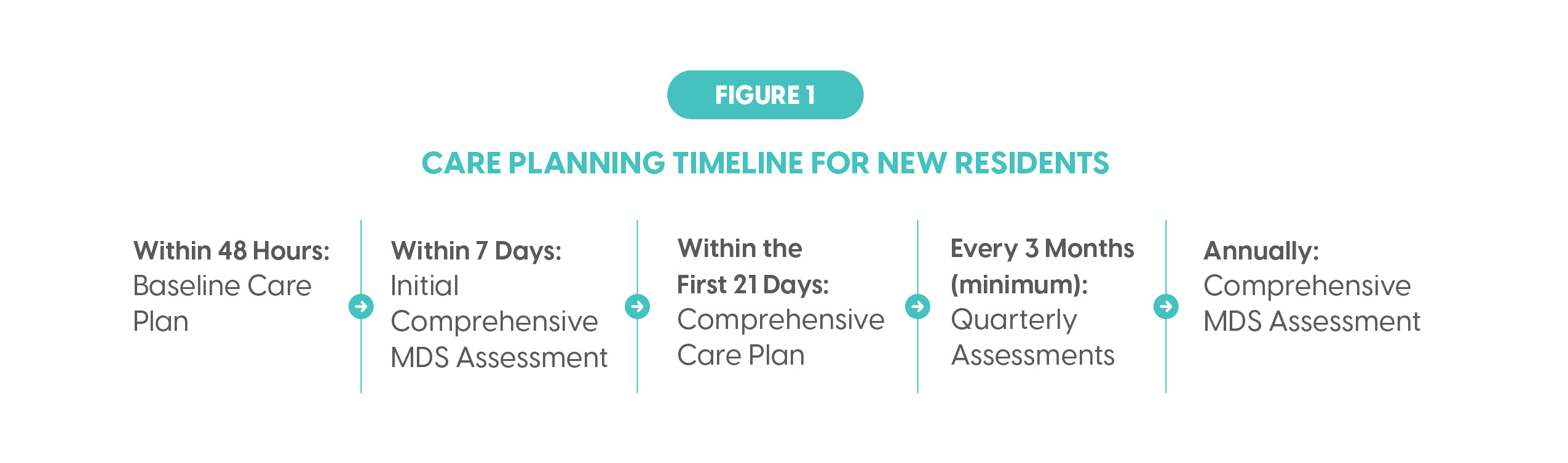
The urgent 48-hour initial window can be viewed as an opportunity. It launches new residents into a personalized schedule for dental evaluation, monitoring, and management. For many, that represents the first consistent focus on oral health improvement in some time.
Early assessments
For the dental elements of the initial assessment, skilled nursing facilities need to determine the answers to these questions:
- Does the resident have his or her natural teeth? If not, is an appliance present in the mouth? If no, what is the reason?
- Does the resident have full or partial dentures? Do they fit comfortably? Are they removed and cleaned each evening?
- Is the individual sensitive to hot or cold temperatures, or to sweets?
- Is the resident able to chew food comfortably? Is one side of the mouth being favored?
Additional telltale signs should be considered such as pain or swelling, an open sore in the mouth, or unhealthy gum or tongue appearance.
Common oral health problems on admission
What are dental professionals likely to observe among new residents? Common issues range across a host of prevalent dental problems and interactions with chronic illnesses, often involving some combination of the following: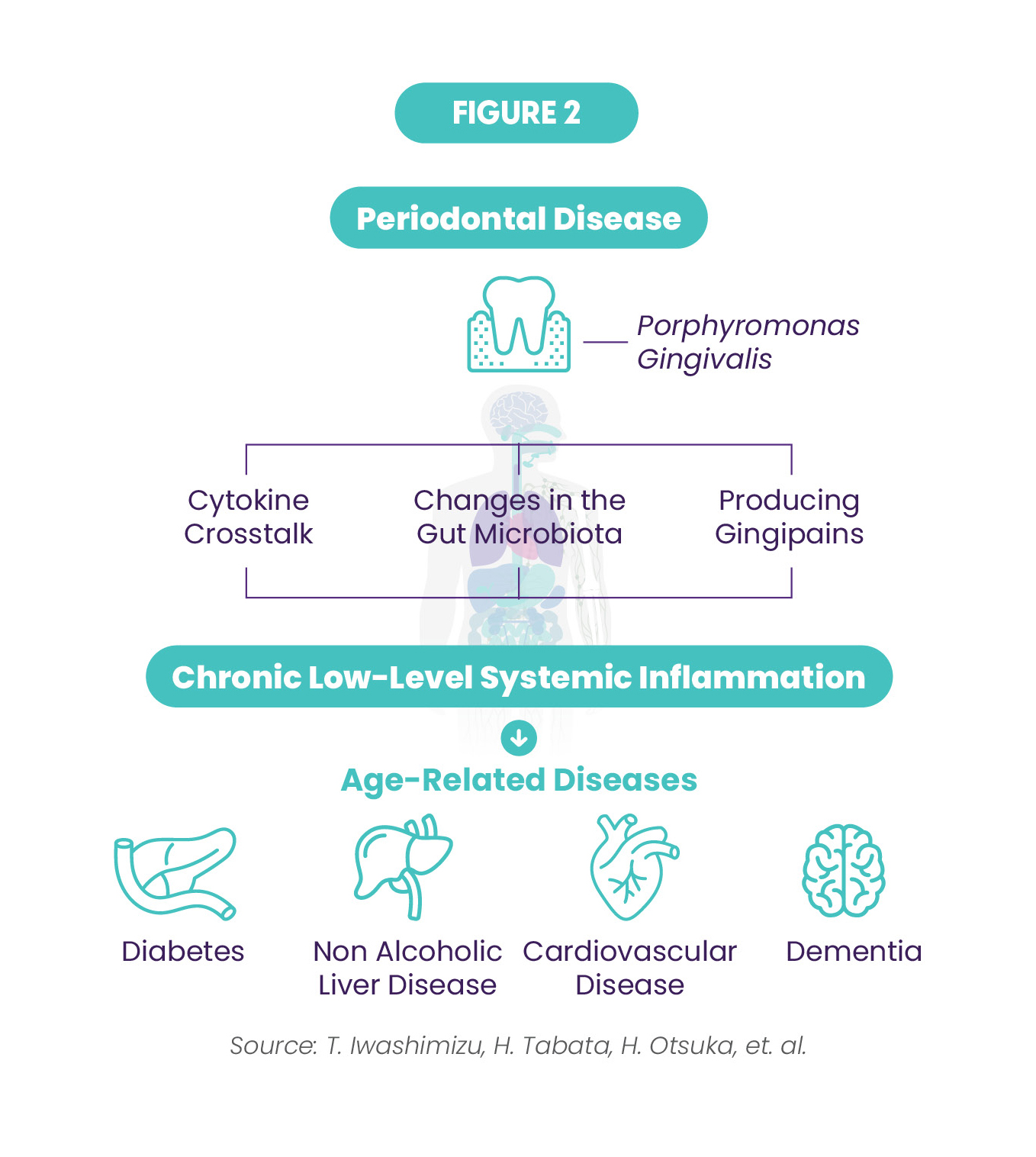
- Untreated tooth decay. Nearly 13% of adults aged 65 years or older have untreated decay in one or more permanent teeth, and some populations have even higher rates.1 Decay can also be present at the root of the tooth, a condition known as root caries. Almost half of adults over age 75 have experienced root caries.2
- Gum disease. Gum infection, also called periodontal disease, is an inflammatory condition affecting the hard and soft structures that support the teeth. Two in three older adults have moderate or severe periodontal disease.3 The bacteria that cause periodontitis can enter the bloodstream through gum tissue, potentially affecting other parts of the body. Ongoing inflammation can strain the immune system and impact several major chronic diseases (Figure 2).
- Tooth loss/missing teeth. Disease causes an average loss of 6.4 teeth in adults over 65.4 Edentulism, the loss of all teeth, occurs in 15% of adults 65 and up, climbing to just under 20% for 75 and older.5 The good news is that oral hygiene improvements over the years have generally reduced the number of missing teeth and increased the percentage of individuals fitted with partial rather than full denture. At the same time, more teeth warrant more diligent checking and preventative care for residents. In addition, removable partial dentures increase plaque accumulation and gingivitis and boost risk of tooth decay.6
Personal care factors
Individual oral health attitudes and practices can complicate initial assessments and ongoing care. One prominent occurrence is a gap in treatment. The elapsed time from a person's last dental visit can be considerable: two years for 36% of respondents in an American Dental Association study.7 Some individuals have even longer hiatus in care. There are multiple reasons for such a deferral, including affordability and lack of insurance coverage.
Another factor that is frequently encountered on admission is dental anxiety. In one survey, 46% of respondents reported moderate dental work and 27% indicated severe fear.8 Twenty-one percent of adults have avoided dental care altogether due to anxiety.9
Dental problems and personal symptoms of depression can also be correlated. Research shows that over half of adults with moderate depression have periodontal disease, and more than one-third have untreated dental decay.10 New residents may experience depression and be less communicative as a result, and oral care plans may need to account for the resident's mental state.
The mobile dentistry solution
Timely action to complete dental assessments and create care plans for incoming residents is not only required, it is also foundational to promoting their overall health. One option for quality execution is use of external dentists who perform onsite services. This solution relieves some of the burden on time-pressed staff and avoids transporting residents off campus.
Mobile dentistry today uses portable technology to provide a full range of care to all residents, including those who need treatment at the bedside. It is important to find mobile services that understand the unique aspects posed by SNF care as well as the need to collaborate with staff and the resident's interested parties.
A final word: communication
One of the most important skills that dental professionals can bring to care management is good communication. It helps get everyone "on the same page" quickly. Residents want caregivers who listen well, are empathetic, and convey information clearly. Given dental care's vital role in compliance and resident wellbeing, engaging professionals with these attributes helps facilities stay solidly prepared for new admissions.
 Ready to strengthen your admission process and support better resident outcomes? Aria Care Partners helps skilled nursing facilities identify oral health concerns early through comprehensive onsite dental services designed specifically for the long-term care setting. From admission assessments and care plan support to ongoing preventive and restorative care, our experienced clinical teams work alongside facility staff to help improve compliance, reduce barriers to treatment, and promote whole-person health. Contact Aria Care Partners to learn how onsite dental services can enhance your facility's approach to resident care from day one.